An older microphone preamplifier; 2 channels.
Versions #
Seems like earlier units like mine used a THAT1512 preamp IC; later I believe an INA163. I believe there are also at least two implementations of the input filter section.
Schematics #
I found partial schems of the input section just around the preamp IC, but I was interested also in the phantom power generation and ended up tracing essentially the whole thing:
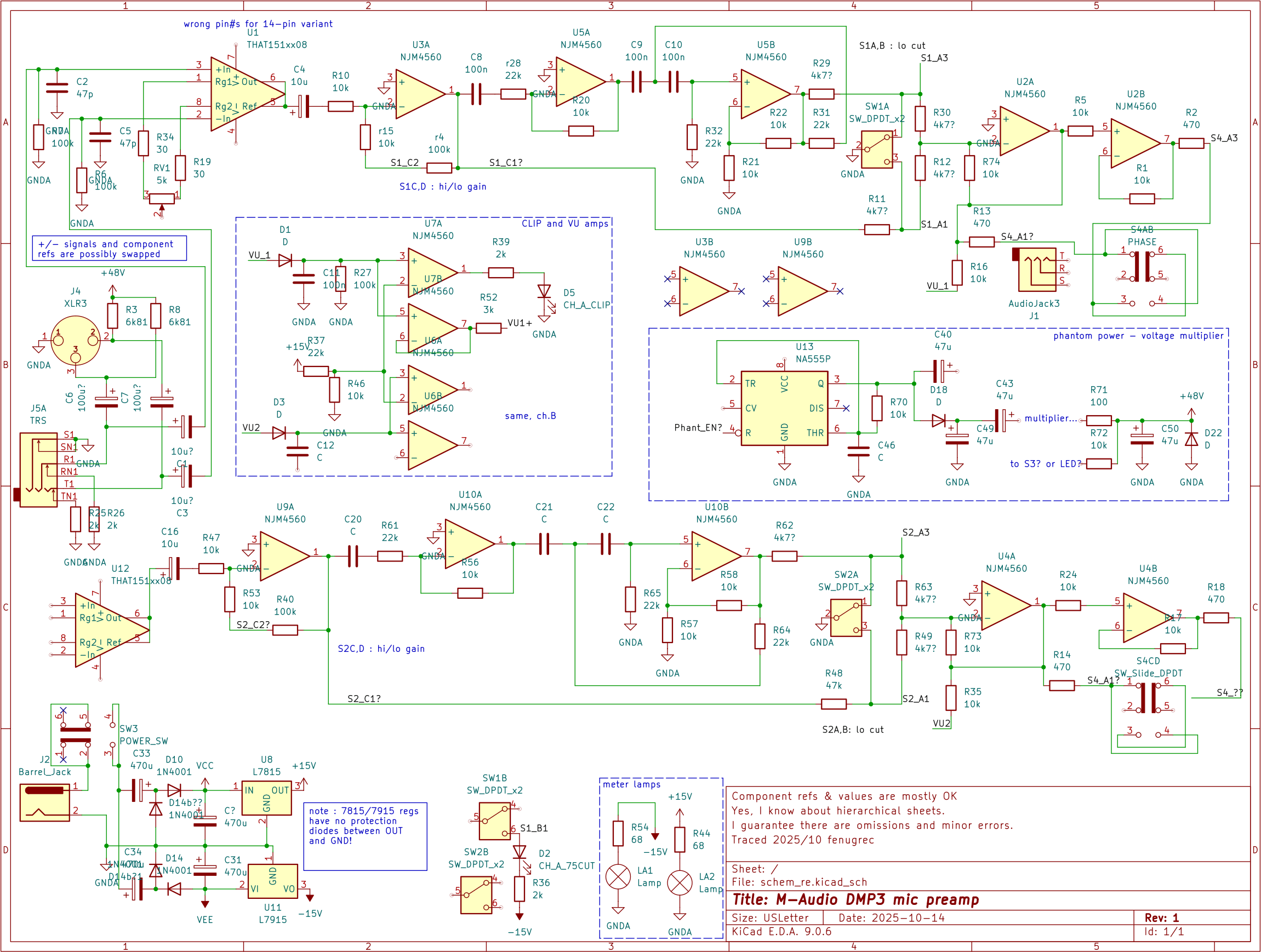
Concerns #
Preamp input protection #
No protection on the delicate inputs of the preamp IC ! There is litterature about this :
- THAT1512 datasheet
- https://www.thatcorp.com/datashts/AES5335_48V_Phantom_Menace.pdf
- https://thatcorp.com/datashts/AES7909_48V_Phantom_Menace_Returns.pdf
Regulator protection #
Seems like the 7815 can go into latchup, presumably if the negative rail settles slightly faster. Datasheets often recommend a diode between OUT and GND, which this version lacks. I always thought that was to protect the regulator from destruction in case of shorts on the input or other anomalies.
60hz #
I found some 60Hz was getting into channel B (none measurable on ch.A), due to its proximity to the AC input section. My experimentation showed that the power switch area was the main source of this, and I improved things by building a small shield around the switch, with leftover RF shield (tinned steel) from probably an old gutted TV tuner…
Phantom multiplier #
The DMP3 uses a ne555 to generate 100-110kHz 15V signal that is multiplied up to 48V. I found that those 100kHz edges are getting into the +15 rail and the ground plane, not to mention the +48v as well. Adding a 100nF MLCC right on the ne555 power pins was not as effective as I hoped. 1uF on both pins 4 and 8 made a noticeable difference however.
I also tried slowing down the edges with a resistor in series with ne555.3; barely measurable difference.
I replaced the final filter cap (C50) with a new aluminium-polymer electrolytic, hoping the lower ESR would be helpful, but it made no measurable difference. I may try adding an extra RC filtering stage after the multiplier. To be continued, maybe.